Lumen Lies: What Projector Brightness Ratings Actually Mean for Your Wallet
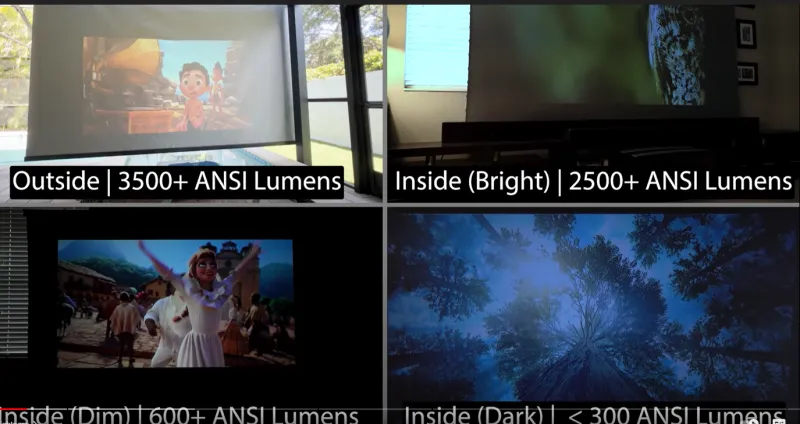
Photo: projector brightness measurement comparison business presentation screen, via www.thesmarthomehookup.com
Walk into any electronics retailer or browse a major e-commerce platform, and you will find projectors advertised with dazzling lumen counts—5,000, 8,000, even 12,000 ANSI lumens—at price points that seem almost too good to be true. For the budget-conscious buyer, these numbers can feel reassuring. They should not. The projector industry has a well-documented history of publishing brightness specifications that bear little resemblance to real-world performance, and the gap between the spec sheet and your living room wall is where cheap projectors quietly drain your budget.
How Brightness Specifications Get Inflated
The term "ANSI lumens" refers to a standardized measurement protocol established by the American National Standards Institute. Under this method, brightness is measured at nine points across a projected image under controlled conditions, and the average is recorded. When a reputable manufacturer publishes an ANSI lumen rating, that figure carries meaning.
The problem is that not every manufacturer adheres to ANSI methodology—and many do not disclose which standard they used at all. Budget projectors frequently list brightness in "LED lumens" or simply "lumens" without qualification. LED lumens, in particular, can measure the raw output of the light source rather than the actual brightness delivered to the screen. The difference is substantial: a projector marketed at 6,000 LED lumens may produce fewer than 1,500 ANSI lumens under real operating conditions. That is not a rounding error. That is a fundamentally different product.
Some manufacturers further inflate figures by measuring brightness only at the projector's maximum lamp setting, which accelerates bulb degradation and often triggers thermal throttling within minutes. The rated brightness, in other words, may exist for only a brief window before the unit automatically dims itself to prevent overheating.
Contrast Ratios: An Even Murkier Number
If lumen ratings invite skepticism, contrast ratio claims demand outright scrutiny. Contrast ratio describes the difference between the brightest white and the darkest black a projector can produce. A higher ratio generally suggests better image depth and shadow detail—qualities that matter enormously in home theater applications and during data-heavy boardroom presentations.
Manufacturers publish two types of contrast ratios: native (or static) contrast and dynamic contrast. Native contrast reflects the projector's actual optical performance. Dynamic contrast is calculated by measuring peak brightness with the iris fully open against the deepest black achievable with the iris nearly closed—conditions that never occur simultaneously during normal viewing. Dynamic contrast ratios of 100,000:1 or higher are common on entry-level projectors; native contrast ratios on those same units may be closer to 400:1.
For a business user presenting charts and financial data in a moderately lit conference room, a low native contrast ratio translates directly into washed-out text and indistinct graph lines. For a home theater enthusiast watching a film with dark cinematography, it means flat, lifeless shadows. Neither outcome reflects the experience the spec sheet implied.
The Real Cost Calculation
Cheap projectors are rarely cheap over time. Consider the full ownership picture. Replacement lamps for budget units often cost between $80 and $150 and may require replacement every 1,500 to 2,000 hours. A projector used for presentations four hours per day, five days per week will burn through a lamp in roughly 18 months. Multiply that across a typical office deployment of three to five years, and lamp costs alone can exceed the original purchase price.
Beyond lamps, budget projectors frequently lack the color calibration stability to maintain accurate output as the bulb ages. What begins as a serviceable image in year one becomes a dim, color-shifted disappointment by year two. Business users may find themselves compensating by dimming room lights more aggressively, purchasing external screens, or simply replacing the unit—none of which were part of the original budget.
What Transparent Specifications Look Like
Reputable manufacturers publish brightness ratings under ANSI or ISO 21118 standards and disclose the lamp mode under which measurements were taken. They distinguish clearly between native and dynamic contrast figures. They provide lumen maintenance data—typically expressed as the number of hours at which output drops to 50 percent of the original rating—so buyers can project long-term performance accurately.
Sanyo's approach to specification transparency reflects this standard. Ratings published for Sanyo LCD projectors are based on standardized measurement protocols, and the company's documentation supports buyers in understanding not just peak performance but sustained output across the product's operational life. For a purchasing manager comparing units across a 12-conference-room deployment, or a home theater enthusiast planning a dedicated screening space, that consistency is not a minor detail—it is the foundation of a sound investment.
Practical Guidance Before You Buy
Before committing to any projector purchase, apply the following questions to the specification sheet:
What standard governs the lumen rating? If the listing says only "lumens" without citing ANSI or ISO 21118, treat the figure with caution. Request documentation or consult the manufacturer directly.
Is the contrast ratio native or dynamic? If only one figure is listed and it is suspiciously high, it is almost certainly a dynamic measurement. Ask for the native contrast specification.
What is the lamp life at normal mode? Many projectors achieve their stated lamp life only in eco mode, which reduces brightness significantly. Confirm the hours rating applies to the mode you intend to use.
What does the lumen maintenance curve look like? A projector that ships at 3,000 ANSI lumens but drops to 1,200 lumens at the 3,000-hour mark is a different product than one that sustains 2,400 lumens across the same interval.
Does the warranty reflect confidence in the product? Short warranty periods on inexpensive units are often an accurate signal of expected longevity.
The Bottom Line
The sticker price of a projector is the smallest number in the total cost of ownership equation. Inflated brightness claims and misleading contrast ratios obscure that reality until the purchase decision has already been made. Approaching specifications with informed skepticism—and prioritizing manufacturers who publish verifiable, standardized data—is not overcaution. It is the difference between a display solution that serves your space for years and one that quietly disappoints from the first presentation forward.