Optical Erosion: The Lens Coating Breakdown That's Quietly Stealing Clarity From Your Sanyo Projector
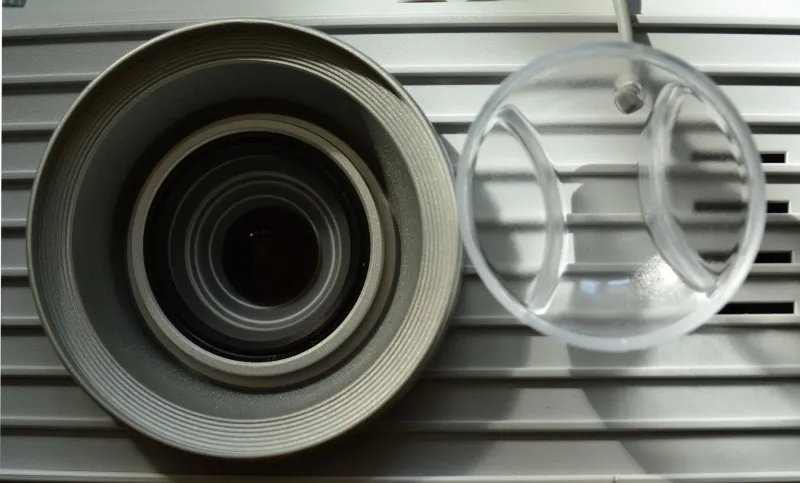
There is a quiet assumption embedded in most projector purchases: the optics are built to last. Buyers scrutinize lumen ratings, contrast specs, and panel resolution — and then trust that the glass sitting in front of all that engineering will simply hold up. For Sanyo LCD projectors, that trust is not entirely misplaced. The optical systems in these units are precision-manufactured and carry multi-layer coatings designed to manage light transmission, reduce internal reflections, and preserve color fidelity over thousands of operating hours.
But here is what the specification sheet does not tell you: those coatings are among the most environmentally sensitive components in the entire projector. They degrade. They do so gradually, in ways that are difficult to see until the damage is already substantial — and the maintenance protocols that would slow that degradation are rarely documented in any user-facing material.
What Lens Coatings Actually Do
Before examining how coatings fail, it is worth understanding what they accomplish. Modern projection lenses do not rely on bare glass. Each optical element is treated with one or more thin-film coatings that serve distinct functions. Anti-reflective coatings reduce the light lost to internal bouncing between lens elements, which directly supports contrast performance. Hydrophobic coatings repel moisture and surface oils. Some elements carry UV-filtering treatments that protect the LCD panels and color wheel components downstream.
These coatings are measured in nanometers — literal fractions of a wavelength of light. Their effectiveness depends entirely on structural integrity. Once that integrity is compromised, the degradation cascades: more light scatters internally, contrast ratios fall, and fine detail loses the crisp definition that makes a well-calibrated Sanyo image distinctive.
The Thermal Cycling Problem
Every time a projector powers on and off, it subjects its lens assembly to a thermal cycle. The lamp or laser source generates substantial heat, and that heat radiates through the optical path. The lens barrel expands slightly. The coatings, which bond to the glass substrate at the molecular level, experience differential thermal stress — particularly at the edges of each element where the coating meets the uncoated rim.
Over hundreds of cycles, this stress creates microscopic delamination. The coating does not peel away visibly; it develops invisible stress fractures that scatter incoming light rather than transmitting it cleanly. The result is a subtle but progressive loss of contrast — the kind that makes a home theater owner wonder why their image no longer looks quite as punchy as it did eighteen months ago, without any single obvious cause.
Manufacturers engineer for this. Sanyo's optical assemblies are designed with thermal tolerances that account for normal operational cycling. What they cannot fully account for is accelerated cycling: projectors that are powered on and off multiple times per day, units installed in rooms with significant ambient temperature swings, or systems that run near their thermal limits due to inadequate ventilation.
Dust Infiltration and the Abrasion Mechanism
Dust is the other primary adversary of lens coating integrity — and it operates through two distinct pathways. The first is straightforward surface accumulation. Airborne particulates settle on the exposed front element and, left undisturbed, create a diffusion layer that softens the projected image. This is a recoverable condition, assuming the dust is removed correctly.
The second pathway is more insidious. Fine particulates — particularly silica-based dust common in many US homes and commercial environments — are abrasive at the microscopic level. When a user wipes the lens with anything other than the appropriate optical microfiber cloth and correct technique, those particles become grinding agents. A single careless cleaning pass can introduce permanent micro-scratches into the coating surface that no subsequent maintenance will reverse.
This is the cleaning mistake that manufacturers quietly acknowledge in fine-print warnings but rarely emphasize in onboarding materials. Dry wiping with paper towels, T-shirt fabric, or even lower-grade lens cloths is one of the most common sources of accelerated coating damage in the field. The scratches are not visible under normal lighting conditions, but they register as contrast loss and a faint veiling glare in bright scene content.
Reading the Early Warning Signs
Because coating degradation is gradual, most users adapt to it without recognizing what is happening. The image does not suddenly look bad — it simply looks slightly less defined than it once did. There are, however, specific diagnostic indicators worth monitoring.
Veiling glare during high-contrast scenes — where bright elements bleed slightly into adjacent dark areas — is one of the earliest signs of anti-reflective coating breakdown. A faint rainbow-like iridescence visible when examining the lens at an angle under direct light can indicate delamination at the coating boundary. And if your projector's measured contrast ratio, when evaluated with a calibration tool, has dropped meaningfully from its initial baseline without any change in room conditions or settings, the optical path deserves scrutiny.
None of these symptoms should be dismissed as normal aging. They are signals that the maintenance schedule — such as it is — has fallen behind.
The Maintenance Protocol Manufacturers Don't Publicize
Sanyo's official documentation covers lamp replacement, filter cleaning intervals, and basic connection troubleshooting. What it does not provide is a structured lens maintenance protocol — a gap that leaves most users operating on instinct and improvisation.
A responsible optical maintenance routine for an LCD projector in regular use should include several elements. First, the front lens element should be inspected visually under a low-angle light source every sixty to ninety days. Any surface haze, smearing, or particulate accumulation should be addressed immediately using a blower bulb to dislodge loose particles before any contact cleaning is attempted.
When contact cleaning is necessary, only purpose-made optical microfiber cloths — kept sealed and free of contamination between uses — should touch the lens surface. A single drop of optical-grade cleaning solution applied to the cloth, never directly to the lens, is the appropriate method. Circular motion, often instinctively used, is incorrect; a single linear stroke from center to edge minimizes the risk of redistributing abrasives across the coating.
Second, the projector's operating environment should be evaluated for thermal stress. Units that power cycle more than twice daily in environments with significant temperature variation benefit from a brief cool-down period before shutdown — many Sanyo models support a cooling fan cycle that, when allowed to complete, reduces the thermal shock to the optical assembly.
Third, for projectors approaching three years of regular use, a professional optical inspection is a worthwhile investment. Authorized service technicians can evaluate coating integrity under magnification and identify delamination or abrasion damage before it reaches the point of affecting visible image quality.
Protecting What the Spec Sheet Ignores
The performance hierarchy of any projection system ultimately rests on its optics. A Sanyo LCD projector with a compromised lens delivers a compromised image regardless of what the electronics behind it are capable of producing. Coating degradation is not a manufacturing defect — it is an environmental and maintenance outcome that careful ownership can meaningfully slow.
The gap between how long lens coatings are engineered to last and how long they actually last in typical installations is a product of the habits and conditions that manufacturers rarely address directly. Closing that gap requires treating the lens as the precision optical instrument it is — not as a piece of glass that simply takes care of itself.
For users who have invested in Sanyo's projection technology for the quality it delivers, that distinction is not a minor footnote. It is the difference between an image that holds its standard for years and one that quietly fades into mediocrity while the hardware beneath it remains fully functional.